
SIAL INTERFOOD: JAKARTA’S B2B FOOD HUB

The global food economy moves through relationships. Behind every product on a supermarket shelf lies a network of manufacturers, distributors, retailers and foodservice operators negotiating supply, logistics and market access. Trade exhibitions have long played a role in facilitating these connections, providing spaces where producers and buyers meet, test products and explore new markets.
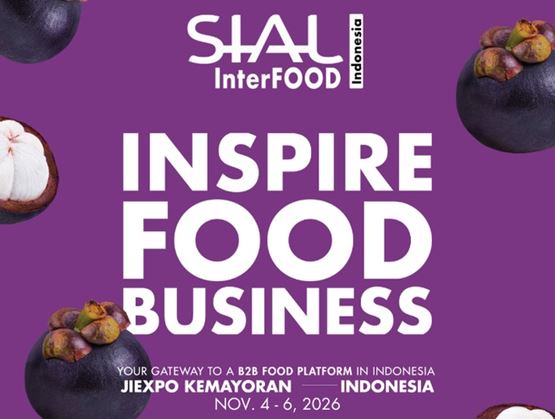
SIAL Interfood 2026 is part of this dynamic, reinventing itself with a renewed focus on business exchange. The upcoming edition will take place from 4 to 6 November 2026 at JIExpo Kemayoran in Jakarta, maintaining the event’s established venue while evolving its format to concentrate more directly on B2B engagement.
Indonesia’s fast growing food market
Indonesia offers a compelling backdrop for a trade event built around commercial opportunity. With a population exceeding 280 million people, the country represents the largest economy in Southeast Asia and one of the most significant consumer markets in the region.
The scale of the domestic food economy is considerable. Indonesia’s food and beverage industry contributes around IDR 1,531.4 trillion (around €78 billion) to the national economy, representing approximately 7.23 percent of GDP. The overall market for food and beverages is estimated at around US$96.5 billion, equivalent to roughly €88.7 billion.
Growth continues to outpace many other manufacturing sectors. The Indonesian food and beverage industry recorded growth of approximately 6.49 percent in 2025, reflecting rising domestic demand and expanding industrial production.

International trade also plays a defining role in the market. Indonesia imports a wide range of agricultural and processed food products including cereals, sugar and confectionery, oil seeds, fruit and vegetables, dairy products and meat. At the same time, it exports key commodities such as vegetable oils, seafood, coffee and cocoa products.
At the consumer level, demographic and technological changes are reshaping the food landscape. Younger urban consumers are increasingly driving demand for convenience, variety and digital accessibility. With the rapid expansion of online food delivery platforms and cloud kitchens, digitalisation is also influencing food consumption patterns across major Indonesian cities.
Against this backdrop, international suppliers are looking closely at Indonesia as a gateway to Southeast Asia’s expanding food economy.
Reinventing the exhibition around B2B exchange
SIAL Interfood is evolving to respond to these opportunities. The event is being repositioned as a fully business to business platform designed to connect global producers with buyers operating across the Indonesian food ecosystem.
Rather than focusing solely on product display, the exhibition aims to facilitate commercial interaction between exhibitors and decision makers in distribution, retail, foodservice and hospitality. This approach reflects broader changes in the exhibition industry, where companies increasingly expect measurable business outcomes from participation.
The event will therefore concentrate on professional visitors and commercial stakeholders. Exhibitors will have opportunities to present products, develop partnerships and explore distribution strategies within one of the region’s most dynamic food markets.
Participation is expected to bring together companies from more than 25 countries, reflecting the international character of the exhibition. Buyers attending the event will include distributors, importers, wholesalers, supermarket operators, hospitality groups and foodservice professionals seeking new suppliers and product concepts.
By strengthening its B2B orientation, SIAL Interfood is positioning itself as a central food exhibition platform for companies looking to build long term commercial relationships in Southeast Asia.
Business matchmaking and innovation on the agenda
One of the core mechanisms supporting this commercial focus is the Business Matchmaking Programme. The initiative is designed to facilitate targeted meetings between exhibitors and buyers whose purchasing needs align with the products on display.
Structured meetings allow participants to move beyond informal networking and engage in focused discussions about sourcing, distribution and partnership opportunities. In rapidly growing markets such as Indonesia, these interactions can often become the starting point for long term business relationships.
The exhibition will also highlight product creativity and emerging trends through the presence of the SIAL Innovation programme. This initiative, a hallmark of events within the SIAL ecosystem, showcases new products and concepts that reflect evolving consumer expectations and industry developments.
Innovation in the Indonesian market is taking multiple forms. Demand for halal certified products continues to expand, reflecting both domestic consumption patterns and export potential. Health oriented foods, functional beverages and sustainably produced ingredients are also gaining traction among urban consumers.
For exhibitors, presenting products within the SIAL Innovation framework offers an opportunity to demonstrate how their offerings respond to these changing market dynamics. The programme functions as an international competition that recognises the most innovative food and beverage products presented at the event. Entries are evaluated by an independent jury of industry experts who assess their originality, relevance and market potential, giving selected products visibility across the wider SIAL Network and on a global scale.
For buyers, the platform serves as a curated overview of emerging ideas across the food sector.
A meeting point within the global SIAL Network community
Trade exhibitions play an important role in shaping the relationships that underpin global food supply chains. By bringing together manufacturers, distributors and buyers in a single location, they accelerate the exchange of products, ideas and partnerships.
SIAL Interfood’s renewed format reflects this broader evolution within the exhibition landscape. By concentrating on B2B commerce, qualified buyers and innovation, the event aims to strengthen its role as a regional gateway for international food trade.
This approach also connects the Jakarta exhibition to a wider international ecosystem. For more than 60 years, the SIAL Network has developed events across major global markets, bringing together thousands of exhibitors and hundreds of thousands of visitors each year to explore new products, technologies and business opportunities.
Within this network of global food industry sectors, SIAL Interfood represents a strategic meeting point for companies seeking to engage with Southeast Asia’s expanding food economy. As the industry prepares for the next edition in Jakarta, the event is positioning itself not only as a marketplace for products, but as a catalyst for partnerships that will shape the region’s food trade in the years ahead.